
Complete Guide to Turnkey Food Production Line Setup 2025
Halal Certification for Food Production Lines: Requirements & Process
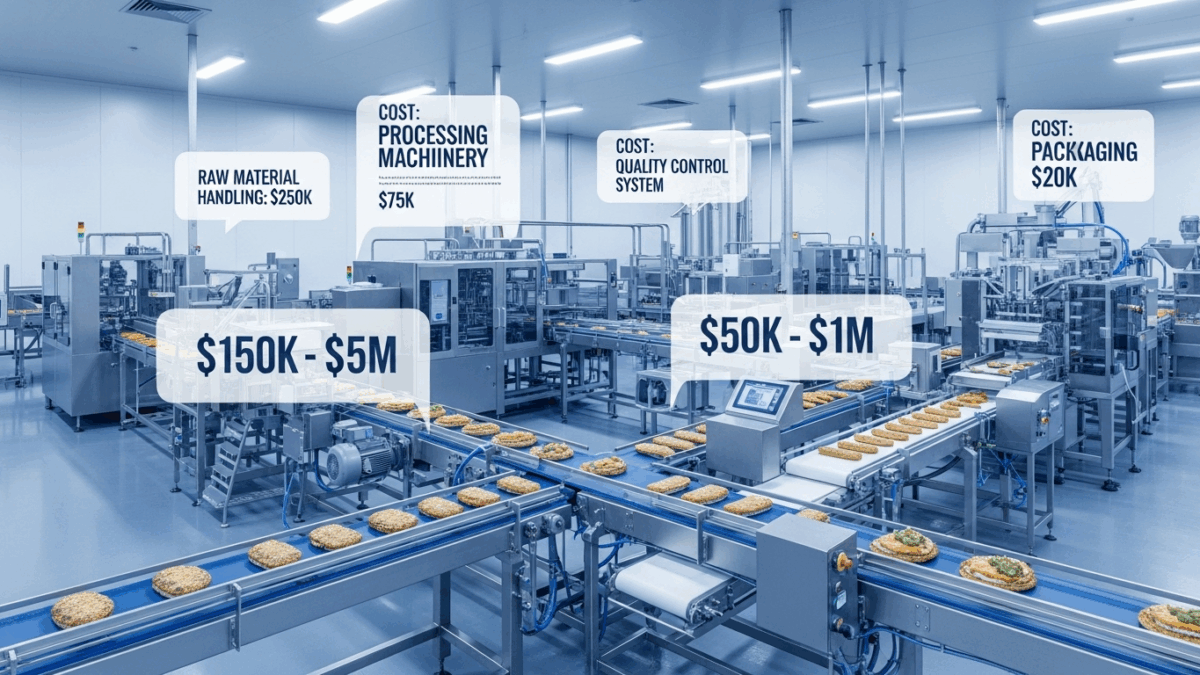
Understanding food production line cost is critical before investing in manufacturing equipment. Whether you’re starting a new food factory or upgrading existing operations, this comprehensive guide breaks down every expense you’ll encounter when building a turnkey food production line in 2025.
Table of Contents
What Affects Food Production Line Cost?
Before diving into specific numbers, several factors dramatically impact your total food production line cost:
Production Capacity – A 100kg/hour line costs significantly less than a 1,000kg/hour system. Your target output directly determines equipment size, power requirements, and space needs.
Product Type – Poultry processing lines differ vastly from bakery or dairy operations. Each food category requires specialized equipment with varying price points.
Automation Level – Manual operations cost 40-60% less upfront but have higher labor costs long-term. Fully automated systems require larger initial investment but deliver better ROI.
Equipment Origin – European machinery typically costs 30-50% more than Turkish or Asian equivalents, though quality and longevity often justify the premium.
Compliance Requirements – Halal, organic, or export certifications add 5-15% to your food production line cost through specialized materials and documentation.
Average Food Production Line Cost by Scale
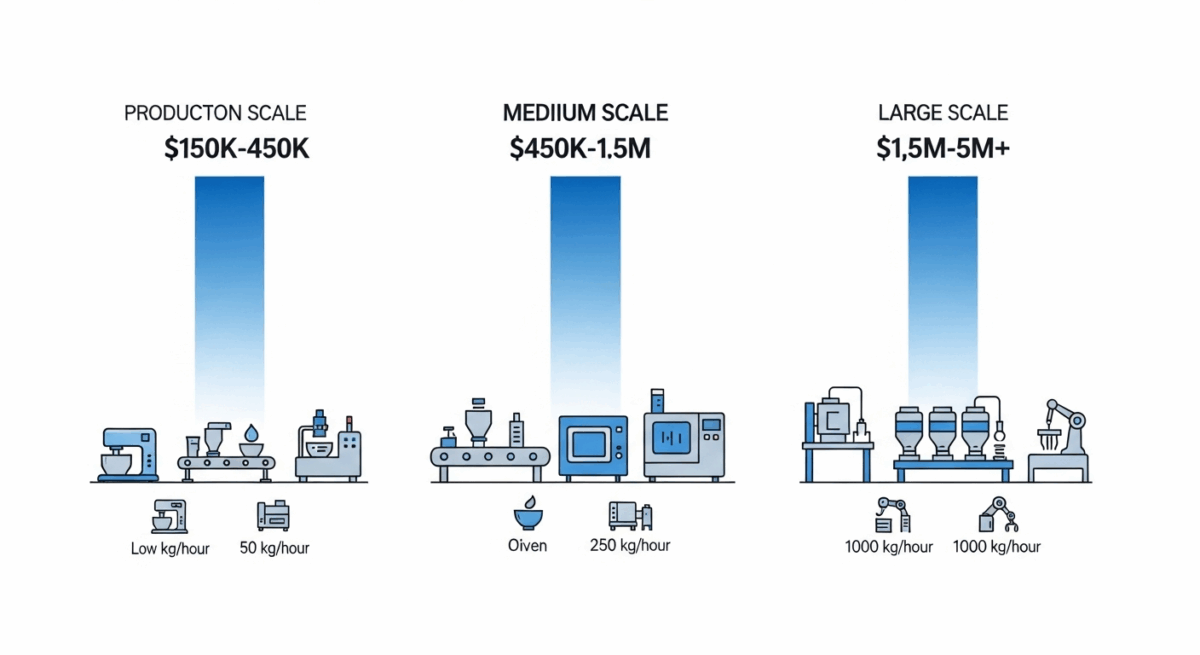
Small-Scale Production Lines (100-300 kg/hour)
Total Investment Range: $150,000 – $450,000
Ideal for: Startup food businesses, local market supply, specialty products
Equipment Breakdown:
- Core processing machinery: $80,000 – $200,000
- Conveyor systems: $15,000 – $40,000
- Cooling/freezing equipment: $25,000 – $80,000
- Packaging equipment: $20,000 – $60,000
- Installation & commissioning: $10,000 – $70,000
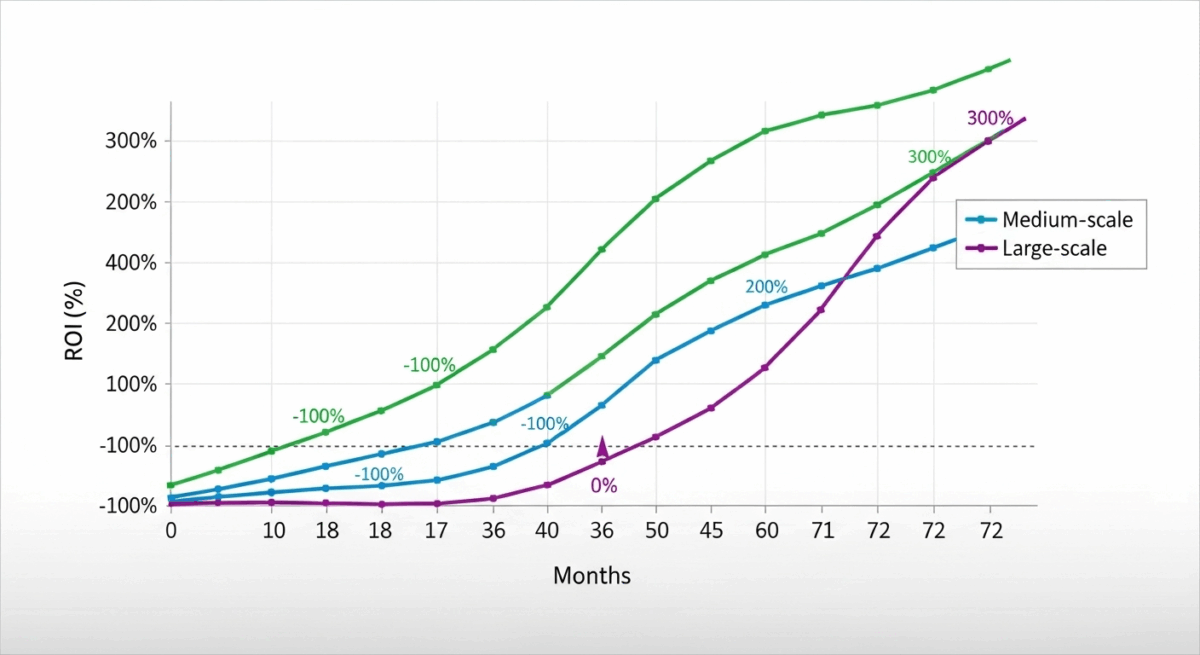
Small-scale lines offer the lowest food production line cost and fastest ROI, typically 18-36 months. Perfect for testing markets before scaling up.
Medium-Scale Production Lines (300-1,000 kg/hour)
Total Investment Range: $450,000 – $1,500,000
Ideal for: Regional distributors, export-focused operations, growing brands
Equipment Breakdown:
- Core processing machinery: $200,000 – $650,000
- Conveyor systems: $40,000 – $120,000
- Cooling/freezing equipment: $80,000 – $250,000
- Packaging equipment: $60,000 – $200,000
- Control systems & automation: $30,000 – $100,000
- Installation & commissioning: $40,000 – $180,000
Medium-scale represents the sweet spot for most manufacturers, balancing food production line cost with production efficiency. ROI typically achieved within 24-48 months.
Large-Scale Industrial Lines (1,000+ kg/hour)
Total Investment Range: $1,500,000 – $5,000,000+
Ideal for: Major brands, multi-country distribution, high-volume production
Equipment Breakdown:
- Core processing machinery: $650,000 – $2,000,000
- Advanced conveyor systems: $120,000 – $400,000
- Industrial cooling/freezing: $250,000 – $800,000
- High-speed packaging: $200,000 – $600,000
- Full automation & controls: $100,000 – $400,000
- Quality control systems: $50,000 – $200,000
- Installation & commissioning: $130,000 – $600,000
Large-scale operations see the highest absolute food production line cost but lowest per-unit production cost. ROI ranges from 36-72 months depending on market penetration.
Detailed Equipment Cost Categories
Processing Machinery
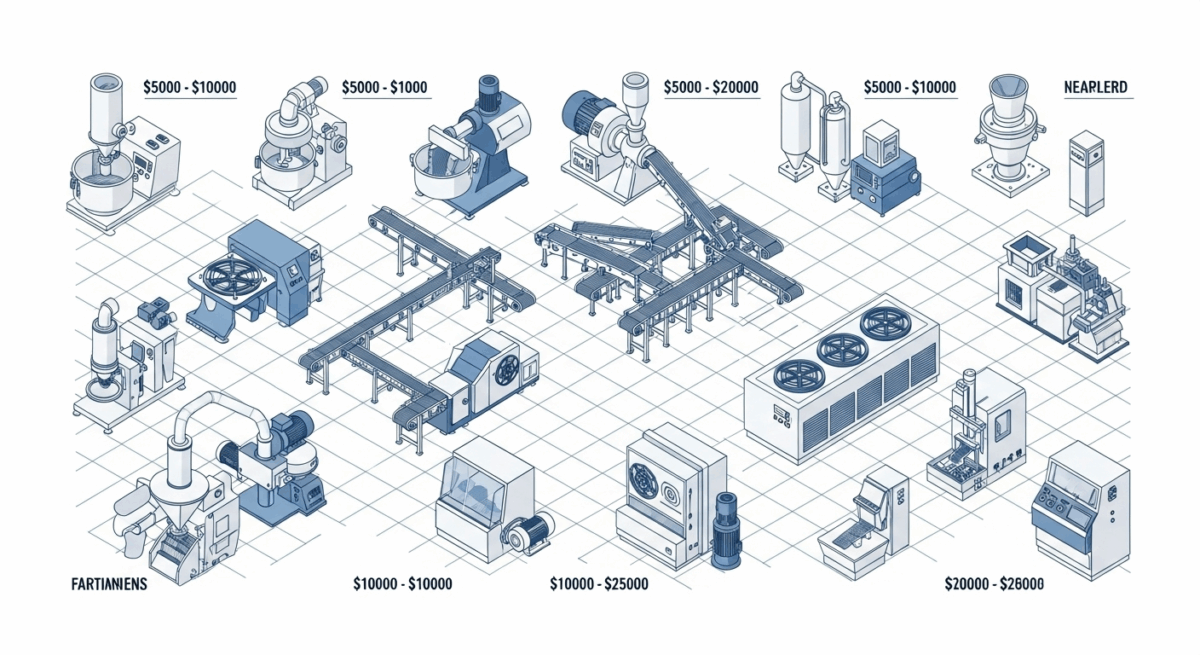
The largest component of food production line cost:
Meat Processing:
- Industrial meat grinders: $15,000 – $80,000
- Tumblers & mixers: $20,000 – $100,000
- Forming machines: $30,000 – $150,000
- Cooking systems: $40,000 – $200,000
Poultry Processing:
- Slaughter equipment: $50,000 – $250,000
- Evisceration systems: $40,000 – $180,000
- Portioning machines: $25,000 – $120,000
- Marination equipment: $15,000 – $70,000
Bakery Production:
- Industrial mixers: $20,000 – $90,000
- Dough dividers: $15,000 – $60,000
- Proofing chambers: $25,000 – $100,000
- Ovens (tunnel/rotary): $60,000 – $300,000
Dairy Processing:
- Pasteurizers: $40,000 – $180,000
- Homogenizers: $30,000 – $120,000
- Separators: $35,000 – $150,000
- Filling machines: $25,000 – $110,000
Conveyor Belt Systems
Critical for material flow, often underestimated in food production line cost:
- Stainless steel mesh belts: $8,000 – $35,000 per section
- Polyurethane belts: $6,000 – $25,000 per section
- Modular plastic belts: $5,000 – $20,000 per section
- Spiral conveyors: $40,000 – $150,000 complete
- Overhead conveyors: $15,000 – $80,000 per system
Choose belt type based on product characteristics, sanitation requirements, and temperature exposure.
Cooling & Freezing Equipment
Essential for food safety and shelf life:
- Blast chillers (batch): $15,000 – $70,000
- Continuous spiral freezers: $80,000 – $400,000
- IQF (Individual Quick Freezing): $100,000 – $500,000
- Cold storage panels: $50 – $120 per square meter
- Refrigeration units: $20,000 – $150,000
Energy-efficient freezing technology adds 15-25% to upfront food production line cost but reduces operating expenses by 30-40%.
Packaging Equipment
Final processing stage costs:
- Flow wrappers: $20,000 – $80,000
- Vacuum packaging: $15,000 – $90,000
- Tray sealers: $25,000 – $100,000
- Cartoning machines: $30,000 – $120,000
- Labeling systems: $10,000 – $50,000
- Metal detectors: $8,000 – $35,000
- Checkweighers: $12,000 – $45,000
Hidden Costs in Food Production Line Investment

Site Preparation (10-15% of total cost)
Many buyers underestimate these expenses:
- Electrical infrastructure: $20,000 – $150,000
- Plumbing & drainage: $15,000 – $80,000
- HVAC systems: $30,000 – $200,000
- Floor reinforcement: $10,000 – $60,000
- Wall & ceiling modifications: $15,000 – $100,000
Pro Tip: Include site prep in your initial food production line cost calculations to avoid budget surprises.
Regulatory & Certification (5-10% of total cost)
Compliance isn’t optional:
- FDA/EFSA certification: $5,000 – $25,000
- Halal certification: $3,000 – $15,000
- Organic certification: $4,000 – $20,000
- ISO certifications: $8,000 – $40,000
- Environmental permits: $2,000 – $15,000
- Fire safety compliance: $5,000 – $30,000
Training & Commissioning (3-7% of total cost)
Getting your team production-ready:
- Operator training: $5,000 – $30,000
- Maintenance training: $3,000 – $20,000
- Food safety protocols: $2,000 – $10,000
- Trial production runs: $8,000 – $40,000
- Quality control setup: $4,000 – $25,000
First-Year Consumables & Spare Parts
Budget 5-8% of equipment value annually:
- Replacement belts: $5,000 – $25,000
- Filters & seals: $2,000 – $12,000
- Cutting blades: $1,500 – $8,000
- Cleaning supplies: $3,000 – $15,000
- Packaging materials: $10,000 – $80,000
Regional Price Variations
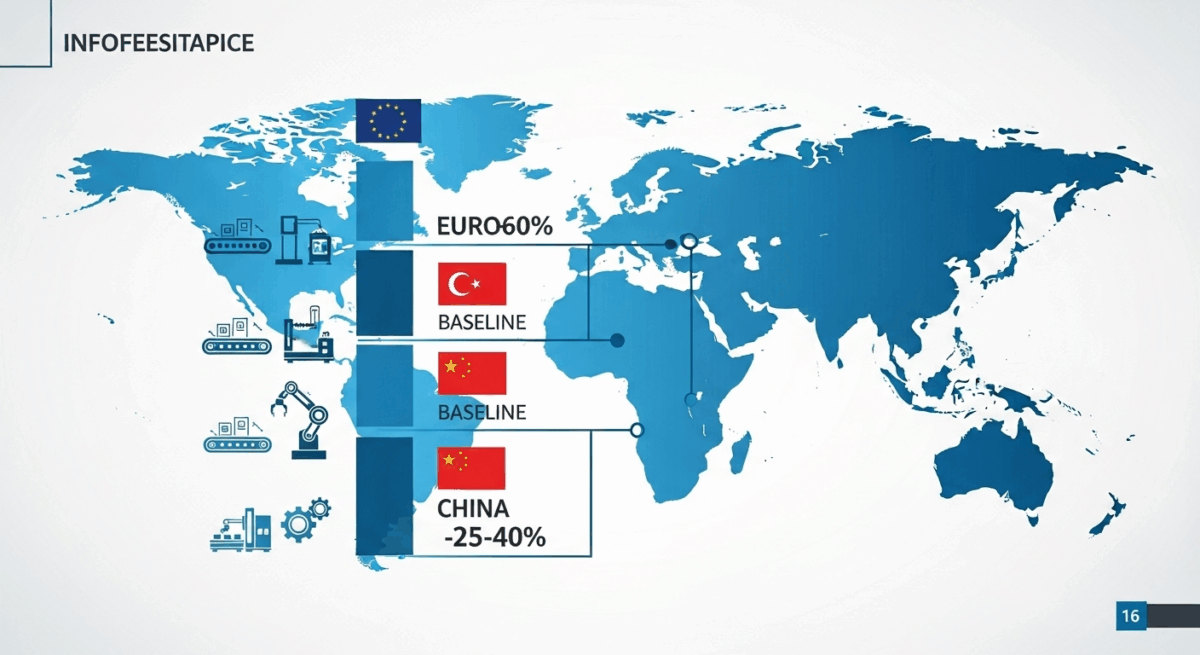
European Equipment
Premium Quality, Higher Cost:
- Processing machinery: +40-60% vs. Turkish
- Conveyor systems: +35-50% vs. Turkish
- Automation controls: +30-45% vs. Turkish
Advantages:
- Longest equipment lifespan (15-25 years)
- Best energy efficiency
- Strongest after-sales support
- Highest resale value
Turkish Equipment
Best Value Proposition:
- Processing machinery: Baseline pricing
- Excellent quality-to-cost ratio
- Strong regional support
- Fast delivery times (6-12 weeks)
Advantages:
- 30-50% lower food production line cost than European
- Perfect for Middle East, Africa, Asia markets
- Halal-compliant manufacturing available
- Local spare parts availability
Chinese Equipment
Budget-Friendly Options:
- Processing machinery: -25-40% vs. Turkish
- Basic functionality focus
- Longer delivery times (12-20 weeks)
Considerations:
- Shorter lifespan (8-12 years)
- Higher maintenance frequency
- Language barriers in support
- Import documentation complexity
Financing Your Food Production Line
Traditional Bank Loans
Terms: 5-10 years, 6-12% interest Down Payment: 20-30% Best For: Established businesses with strong credit
Equipment Leasing
Terms: 3-7 years, effective rate 8-15% Down Payment: 0-10% Best For: Preserving working capital, tax benefits
Vendor Financing
Terms: Negotiable, typically 3-5 years Down Payment: 10-25% Best For: Turnkey projects with trusted suppliers
Government Incentives
Turkey offers substantial support:
- Technology investment support: Up to 40% grant
- Export-focused operations: Additional 15% credit
- Regional incentives: Varies by location
- R&D tax credits: 15-25% of qualifying expenses
These incentives can reduce effective food production line cost by 20-40%.
ROI Timeline by Production Scale
Small-Scale Operations
Break-Even Point: 18-36 months Key Success Factors:
- Premium pricing strategy
- Niche market focus
- Direct-to-consumer sales
- Low overhead management
Example Calculation:
- Initial investment: $300,000
- Monthly revenue: $50,000
- Operating expenses: $30,000
- Monthly profit: $20,000
- Payback period: 15 months
Medium-Scale Operations
Break-Even Point: 24-48 months Key Success Factors:
- Regional distribution partnerships
- Multiple product SKUs
- Operational efficiency
- Moderate automation
Example Calculation:
- Initial investment: $900,000
- Monthly revenue: $180,000
- Operating expenses: $120,000
- Monthly profit: $60,000
- Payback period: 15 months
Large-Scale Operations
Break-Even Point: 36-72 months Key Success Factors:
- Export market access
- Economies of scale
- Full automation
- Brand development
Example Calculation:
- Initial investment: $3,000,000
- Monthly revenue: $800,000
- Operating expenses: $550,000
- Monthly profit: $250,000
- Payback period: 12 months
Cost-Saving Strategies Without Compromising Quality
Strategic Equipment Selection
Phase Your Investment: Start with essential processing equipment, add automation gradually. This reduces initial food production line cost by 25-40% while maintaining production capability.
Buy Pre-Owned Strategically: Consider certified used equipment for non-critical components like storage tanks and basic conveyors. Save 30-50% on these items.
Modular Design: Choose expandable systems that grow with your business. Pay for current capacity, not future potential.
Smart Supplier Negotiation
Bundle Equipment Purchases: Buying complete turnkey systems often yields 10-20% discounts versus piecemeal purchases.
Request Trade-In Value: If upgrading existing equipment, negotiate trade-in credits worth 15-30% of used equipment value.
Payment Terms: Extended payment schedules or milestone-based payments improve cash flow without increasing total food production line cost.
Regional Advantages
Turkey as Manufacturing Hub:
- EU-standard equipment at Asian prices
- No import duties for many markets
- Fast delivery to Middle East, Africa, Europe
- Established food equipment expertise
Local Assembly Options: Some equipment can be shipped unassembled, reducing freight costs by 40-60% on large systems.
Total Cost of Ownership: 5-Year Analysis
Beyond Initial Food Production Line Cost
Year 1: High Investment Phase
- Equipment purchase: 100% of budget
- Installation & commissioning: 8-12% of equipment
- Initial training: 3-5% of equipment
- Spare parts inventory: 5% of equipment
- Total Year 1: ~118-122% of equipment cost
Years 2-5: Operating Phase
- Annual maintenance: 3-6% of equipment cost
- Spare parts replacement: 2-4% annually
- Energy consumption: $0.15-0.30 per kg produced
- Operator labor: $2,000-8,000 per operator monthly
- Cumulative 5-Year Total Ownership Cost: 145-165% of initial equipment investment
Cost Per Kilogram Produced
Understanding unit economics:
Small-Scale (200 kg/hour):
- Equipment cost per kg capacity: $1,500-2,250
- Operating cost per kg: $0.80-1.50
- Total 5-year cost per kg: $1.20-1.80
Medium-Scale (500 kg/hour):
- Equipment cost per kg capacity: $900-1,500
- Operating cost per kg: $0.50-0.90
- Total 5-year cost per kg: $0.70-1.10
Large-Scale (2,000 kg/hour):
- Equipment cost per kg capacity: $750-1,000
- Operating cost per kg: $0.30-0.60
- Total 5-year cost per kg: $0.45-0.75
Scale delivers 40-60% cost advantages over 5 years when production volumes justify the investment.
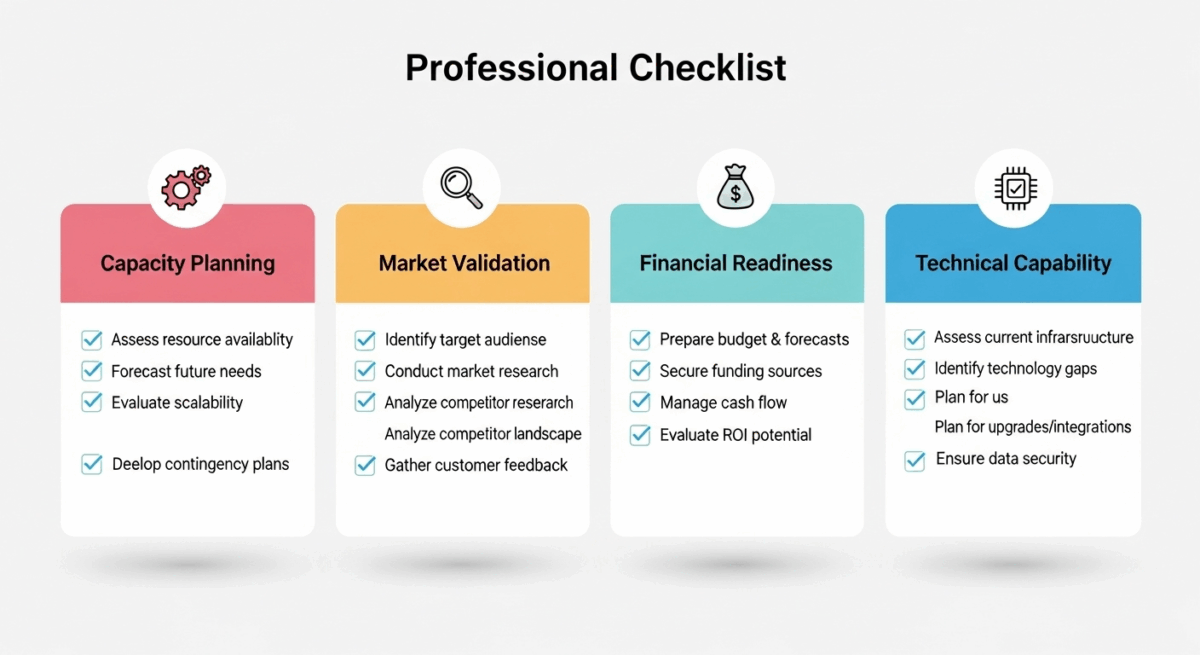
Making the Right Investment Decision
Questions to Ask Before Committing
Capacity Planning:
- What’s your realistic production target for Year 1? Year 3? Year 5?
- Can the system scale without complete replacement?
- What’s your peak season demand versus average?
Market Validation:
- Do you have confirmed buyers for your production volume?
- What price point ensures profitability at your scale?
- How quickly is your market segment growing?
Financial Readiness:
- Can you sustain 6-12 months of operations if sales lag?
- What’s your backup plan if equipment financing falls through?
- Have you stress-tested your ROI model against 20% lower revenue?
Technical Capability:
- Do you have experienced food production managers?
- Can you hire qualified equipment operators locally?
- Is technical support available in your region?
Getting Accurate Food Production Line Cost Quotes
Information Suppliers Need
Production Specifications:
- Product type and characteristics
- Target hourly capacity
- Shift schedule (8/16/24 hours)
- Quality grade requirements
Facility Details:
- Available floor space (square meters)
- Ceiling height
- Electrical capacity
- Water supply and drainage
- Temperature control requirements
Regulatory Requirements:
- Target export markets
- Required certifications (Halal, Organic, etc.)
- Local food safety regulations
Budget Reality: Honest budget disclosure helps suppliers design optimal solutions. Hiding budget constraints leads to mismatched proposals.
Why Turnkey Solutions Offer Better Value
Integrated Design: All components work together seamlessly, eliminating compatibility issues that plague piecemeal installations.
Single Accountability: One supplier responsible for entire system performance, not finger-pointing between multiple vendors.
Faster Time to Market: Coordinated installation and commissioning reduces startup time by 30-50% versus self-managed projects.
Comprehensive Training: Operators learn the complete system, not isolated equipment pieces.
Warranty Simplicity: Single warranty covering entire line, typically 12-24 months.
True Food Production Line Cost Transparency: Fixed-price contracts eliminate cost overruns that typically add 15-25% to DIY projects.
Conclusion: Investing Wisely in Your Production Future
Understanding food production line cost is just the beginning. The right investment balances initial expense, operational efficiency, quality output, and growth flexibility.
Whether you’re investing $200,000 or $2,000,000, the fundamentals remain constant:
✓ Choose capacity based on validated demand, not optimistic projections
✓ Invest in quality equipment that lasts 15+ years, not the cheapest option
✓ Budget 20% beyond equipment costs for installation and startup
✓ Prioritize energy efficiency to reduce 5-year operating costs
✓ Partner with suppliers offering comprehensive after-sales support
Your food production line cost should reflect the value it creates, not just the price tag. At Uyarlı Synergy, we’ve helped manufacturers across three continents optimize their production line investments, achieving ROI 20-40% faster than industry averages through strategic design and equipment selection.
Ready to get accurate pricing for your specific production needs? Our engineering team provides detailed cost breakdowns customized to your product, capacity, and market requirements—with no obligation and complete transparency.
Contact our team today for your personalized food production line cost analysis and discover how the right investment strategy can transform your manufacturing vision into profitable reality.